
Convenience Stores and Newsagents Data List
Prospect360 offers an extensive Convenience Stores and Newsagents Data List, covering independent retailers, shop owners, and newsagent operators across the UK. This database includes 1,102 personal business email addresses, 2,048 direct telephone numbers, and 4,210 postal addresses of key decision-makers.
Our Convenience Stores and Newsagents Database features in-depth contact records for senior roles in:
All data provided is fully GDPR and PECR compliant, with verified personal business emails, TPS-screened telephone numbers, and company postal addresses as standard. With a 95% accuracy guarantee, this comprehensive database delivers dependable access to the retail decision-makers most relevant to your business, enabling precise and successful marketing initiatives.
Quick Links To UK Convenience Stores and Newsagents Sector Data Lists
Convenience Stores and Newsagents Email List
Convenience Stores and Newsagents Telephone List
Convenience Stores and Newsagents Postal Mailing List
Convenience Stores and Newsagents Email List
The Convenience Stores and Newsagents Email List features 1,102 retail operations across the UK, with the highest concentrations found in Greater London (246) and the South East (169). This database includes independent retailers, convenience store proprietors, and newsagent business owners operating within various retail segments.
Our breakdown presents contact volumes separated by personal business email addresses and company telephone numbers.
Should you prioritize a specific contact method, for instance, email communications rather than phone calls, we provide the alternative channel free of charge whenever such details are on record.
Where available, you can also reach decision-makers holding Director or Manager positions within departments such as Finance, Sales, Marketing, Facilities, Office, Operations, HR, Procurement, and IT, among other functional areas.
Convenience Stores and Newsagents Telephone List
The Convenience Stores and Newsagents Telephone List includes 2,048 businesses across the UK, with Greater London leading with 490 entries, followed by the South East (271) and the North West (250). The data represents independent retailers and newsagent operators managing stores throughout all major regions.
Convenience Stores and Newsagents Postal Mailing List
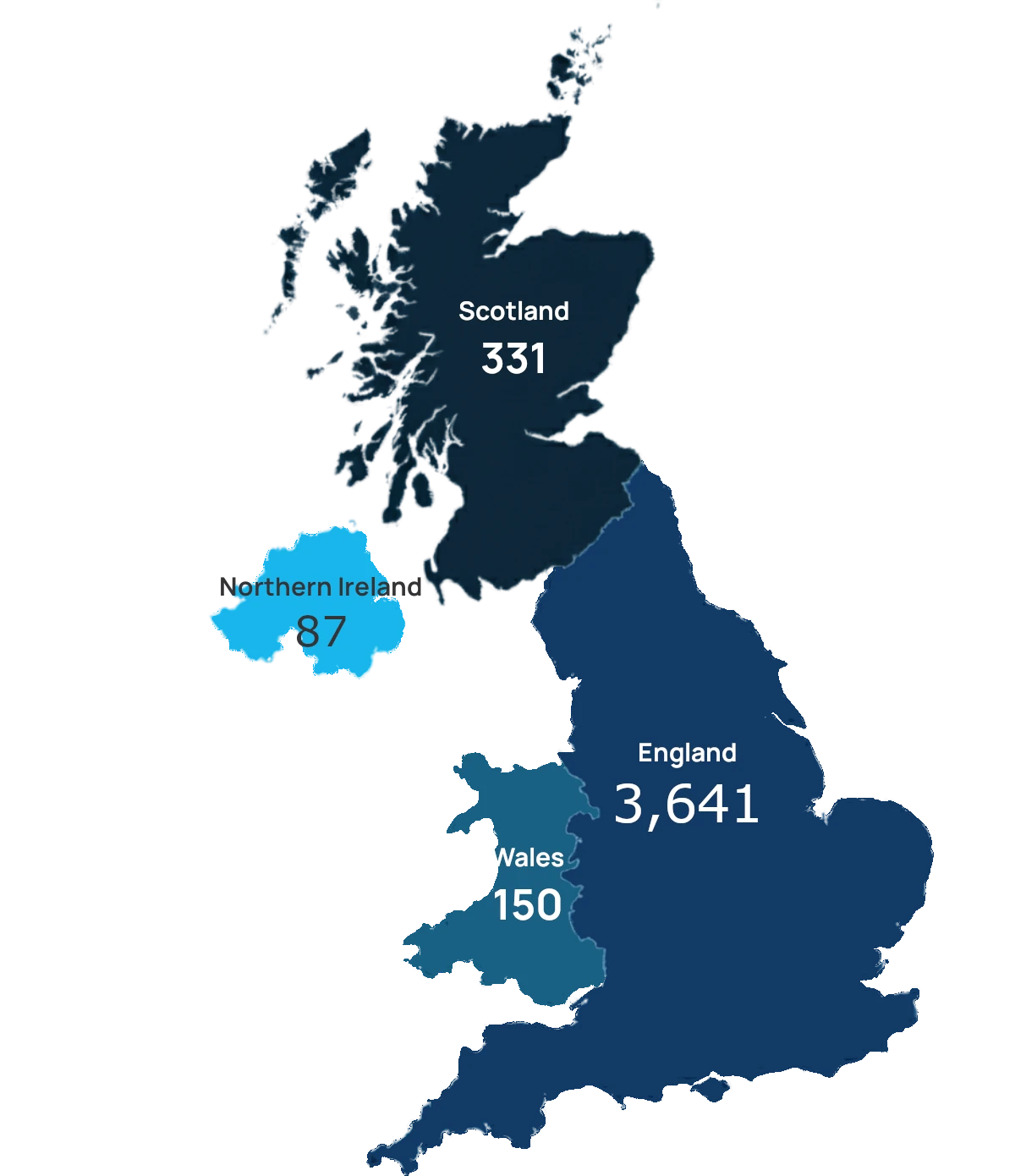
The Convenience Stores and Newsagents Postal Mailing List contains 4,210 businesses across the UK, with Greater London leading the way with 1,000 entries, followed by the South East (538) and the North West (502). The database captures independent convenience store operators and newsagent proprietors throughout all major regions, representing essential retail businesses serving local communities.
Regarding business scale, the majority are small independent operations, with many retailers working as owner-operators or employing minimal staff. This reflects the characteristic structure of independent convenience stores and newsagents prevalent across the UK retail landscape.
Expert Convenience Stores Insights
With contact details for 4,210 independent convenience stores and newsagents across the UK, targeted marketing proves highly effective for reaching store owners and decision-makers. As the majority are small, owner-operated businesses (1,426 employing 1-4 staff, with 2,008 having unknown employee size suggesting many are family-run operations), communication strategies must respect the hands-on nature of convenience retail where owners balance serving customers, managing stock, and running daily operations throughout extended trading hours, often from early morning until late evening, seven days a week.
Independent store owners value contact methods that accommodate their demanding schedules, allowing them to review supplier offerings during quieter trading periods, between serving customers, or outside peak hours, rather than being interrupted during busy morning rushes, lunchtime trading, or evening peaks when they’re actively serving their communities. In-person visits during mid-morning or mid-afternoon prove most effective, while telephone calls, email, and WhatsApp enable these business owners to engage with relevant propositions on their own schedule, saving information for future reference and revisiting when making purchasing decisions.
Conclusion: Multi-channel marketing combining respectful in-person contact, telephone engagement, and digital follow-up delivers exceptional results when targeting independent convenience stores and newsagents, particularly when campaigns are professionally presented, demonstrate clear commercial value, and recognize the relationship-driven, community-focused nature of independent retail operations where owners make purchasing decisions based on trust, product quality, and genuine partnership potential.
What Our Convenience Stores and Newsagents Database Offers
Our Convenience Stores and Newsagents List supplies detailed email, telephone and postal contact details for independent retailers and shop proprietors throughout the UK, providing you with the crucial information needed to drive your business forward. Here’s what our database includes:
- Comprehensive Contact Details: Obtain a full directory of convenience store managers, newsagent owners, and independent retail operators across the UK, including named proprietors with personal business email addresses and TPS-verified telephone numbers. Each entry comes with a confirmed postal address included.
- Direct Access to Decision Makers: Our database holds information on the actual shop owners and retail managers, who possess complete buying authority for their stores. This allows you to target your promotional activities more precisely, reaching directly to individuals who can make instant purchasing choices without requiring approval from others.
- Flexible Segmentation: Our data is systematically arranged, allowing you to refine your list based on various factors such as geographical area, retail type, and business category. This guarantees your promotional campaigns deliver optimal targeting and impact.
- Continuously Refreshed Data: We keep our database current through ongoing updates to ensure accuracy and relevance. This dedication means you’re always working with the freshest information on hand, giving you a notable competitive edge in your marketing endeavors.
- 95% Accuracy Assurance: Our Convenience Stores and Newsagents database receives regular quality checks to confirm all information meets accuracy requirements upon delivery. If the data drops below our 95% accuracy benchmark, we offer a complete refund or replacement assurance.
Using the Convenience Stores and Newsagents Database
The Convenience Stores and Newsagents Data List serves as an essential tool for businesses aiming to connect with independent retailers and shop owners operating across the UK’s retail landscape. Whether you’re targeting convenience store operators, newsagent proprietors, coffee shop owners, or specialist food retailers, this database provides detailed contact information to make your promotional activities strategically focused and results-driven.
Our database has been meticulously assembled to include GDPR-compliant email addresses, postal locations, and telephone numbers for retail business owners nationwide. By offering cost-effective, GDPR-compliant convenience store and newsagent contact data, we help businesses of every size access the information needed while upholding strict compliance and quality benchmarks.
Primary benefits of leveraging the Convenience Stores and Newsagents Data List include:
- Reliability: Our data receives consistent verification and refreshment, sustaining a minimum 95% accuracy standard, enabling you to direct your promotional resources toward trustworthy leads.
- Targeted Filtering: Customize your outreach by sorting data based on geographical territory, retail category, or store type, facilitating highly specific marketing approaches.
- Budget-Friendly Pricing: Our economical rate structure allows businesses to secure vital contact information without exceeding their promotional spending limits.
Utilize this valuable asset to enhance your email outreach, telephone prospecting, or direct mail efforts and establish connections with the retail decision-makers most aligned with your products or services. For tailored support or to learn how our database can elevate your marketing approach, contact us today.
Beyond our Convenience Stores and Newsagents database, Prospect360 offers access to an extensive range of additional business contact lists. Our comprehensive data portfolio features senior-level decision-makers across multiple organizational functions and industry sectors. We also hold detailed records for key contacts within the Public Sector, providing you with a total solution for connecting with your desired target markets.
Additional Services
Beyond our detailed Convenience Stores and Newsagents database, Prospect360 operates a proficient in-house marketing team. Our seasoned specialists are committed to improving or completely overseeing your promotional campaigns. Leveraging more than 20 years of sector experience, our team provides an extensive array of customized marketing solutions to meet your particular business requirements:
What is a convenience store?
A convenience store is a small retail business that provides quick access to everyday essentials, typically operating with extended hours to serve local communities. In the UK, these establishments are often known as newsagents or corner shops (even though they may not actually be located on a corner!), and many are independently owned and operated.
Unlike large supermarkets or chain retailers, convenience stores focus on accessibility and speed rather than extensive product ranges. They stock essential items such as groceries, newspapers, magazines, snacks, beverages, tobacco products, and household basics that customers need urgently or have forgotten to purchase during their main shopping trips.
Convenience stores are found in residential neighbourhoods, on high streets, near transport hubs, and in areas where quick access to provisions is valued over comprehensive selection. They serve as vital community resources, often becoming local gathering points where shop owners know their regular customers by name.
The convenience store model appeals to independent retailers who value direct customer relationships, community involvement, and the flexibility of running a local business without the complexity of managing large premises or extensive inventory. Many convenience store owners are former retail employees who have chosen self-employment, local entrepreneurs building businesses in their own communities, or families running multi-generational shops that have served their neighbourhoods for decades.
Why sell to Independent convenience stores?
Independent convenience stores represent a valuable distribution channel for suppliers seeking to reach local communities effectively. These independently owned retailers offer distinct advantages that make them essential partners in a comprehensive sales strategy.
Direct Decision-Making: Independent store owners make purchasing decisions themselves, without lengthy corporate approval processes. Suppliers can negotiate directly with the business owner, demonstrate products on the spot, and secure listings within days rather than months. This speed and accessibility makes independents ideal for launching new products or testing regional markets.
Flexibility and Responsiveness: Store owners possess intimate knowledge of their customers and can quickly adapt their product range to local preferences. They’re more willing to trial innovative products, support emerging brands, and stock items that larger chains might reject due to minimum volume requirements or risk-averse buying policies.
Relationship-Based Partnerships: Independent retailers value personal relationships with suppliers. Building trust creates loyal partnerships where products receive prominent shelf placement, personal recommendations to customers, and consistent reordering. These aren’t transactional relationships but genuine business partnerships built over time.
Better Margin Opportunities: Independent stores operate with higher retail margins than supermarket chains, making them less price-sensitive when evaluating products. They focus on quality and customer appeal rather than competing purely on price, allowing suppliers to maintain sustainable wholesale pricing.
Geographic Coverage: Thousands of independent convenience stores across urban, suburban, and rural locations provide extensive distribution reach. They serve communities where large supermarkets don’t operate, accessing customers who value local shopping options and convenient access to everyday essentials.
Valuable Market Feedback: Store owners provide direct, honest feedback about product performance, customer reactions, and competitive positioning. This real-world insight helps suppliers refine offerings and understand what resonates with consumers before investing in wider distribution.
Reduced Chain Dependence: Diversifying distribution across independent retailers reduces reliance on major supermarket chains, which often demand aggressive pricing, promotional funding, and substantial listing fees. Independent stores offer alternative routes to market with more balanced commercial terms.
Collective Volume Potential: While individual stores order smaller quantities, the independent sector’s collective purchasing power is substantial. Through wholesalers, symbol groups, and delivery services, suppliers efficiently reach thousands of independent retailers, creating significant cumulative volume.
For suppliers, independent convenience stores combine accessibility, flexibility, and partnership opportunities that make them essential distribution channels for reaching consumers where they shop daily.
Who owns independent convenience stores?
Independent convenience stores are owned by a diverse range of individuals and families who have chosen to operate their own retail businesses rather than work for larger corporations or chains. These owner-operators come from various backgrounds and follow different paths into convenience store ownership.
Family Businesses: Many independent convenience stores are family-owned operations, often spanning multiple generations. Parents who established the shop decades ago may pass ownership to their children, creating legacy businesses deeply embedded in their communities. Family members frequently work together, sharing responsibilities across different aspects of running the store.
Former Retail Employees: Experienced retail workers who have spent years working for supermarket chains or other convenience stores often transition into ownership, using their industry knowledge and customer service skills to establish their own businesses. They understand retail operations from the ground up and apply this expertise to independent ownership.
Immigrant Entrepreneurs: Independent convenience stores have historically provided entrepreneurial opportunities for immigrant families seeking to establish themselves in new communities. Many store owners are first or second-generation immigrants who have built successful businesses serving diverse local populations, often specializing in products that reflect their cultural heritage alongside mainstream convenience items.
Career Changers: Professionals from other industries sometimes purchase convenience stores as lifestyle businesses or investment opportunities. Former corporate employees, tradespeople, or individuals seeking greater autonomy and work-life balance may acquire existing stores or start new operations.
Local Business People: Established local entrepreneurs who already own other businesses in the area may add convenience stores to their portfolios, viewing them as stable, community-serving enterprises that complement their existing commercial interests.
Symbol Group Franchisees: While maintaining independent ownership, some store owners operate under franchise-style arrangements with symbol groups like Costcutter, Londis, Spar, or Nisa. These owners retain business ownership and decision-making authority while benefiting from group branding, centralized purchasing power, and operational support.
Community Groups: In some rural areas, particularly where commercial viability is challenging, village shops are owned and operated by community cooperatives or social enterprises. Local residents collectively invest in and manage these stores to preserve essential retail services in their communities.
Property Investors: Some convenience stores are owned by individuals or families who view them as property investments with operational businesses attached. They may manage the stores themselves or employ managers to run day-to-day operations while they retain ownership.
Multiple Store Operators: Successful single-store owners sometimes expand to own several convenience stores across different locations, though they typically remain hands-on operators rather than becoming disconnected corporate entities. These small chains of 2-5 stores still operate with the flexibility and local focus characteristic of independent retail.
The common thread among independent convenience store owners is their direct involvement in and responsibility for their businesses. Unlike corporate chains with distant shareholders and professional management hierarchies, independent owners are typically present in their stores, personally serving customers, making buying decisions, and maintaining the day-to-day operations that keep their businesses thriving within their local communities.
What is the best contact channel for convenience shop owners and directors?
Reaching independent convenience store owners effectively requires understanding their working patterns, time constraints, and communication preferences. Unlike corporate buyers with office hours and dedicated purchasing departments, store owners are hands-on operators juggling multiple responsibilities throughout their trading day.
In-Person Store Visits: Face-to-face contact remains the most effective channel for engaging independent convenience store owners. Visiting the store allows suppliers to introduce themselves personally, demonstrate products directly, build rapport, and have immediate purchasing conversations. Store owners appreciate seeing products firsthand and can make decisions on the spot without lengthy approval processes. The key is timing visits during quieter periods, typically mid-morning (10am-12pm) or mid-afternoon (2pm-4pm), avoiding busy periods like early mornings, lunchtimes, and evening rushes.
Mobile Phone Calls: Store owners are rarely at desks but are almost always reachable by mobile phone. A brief, respectful phone call can be highly effective for scheduling visits, following up on orders, or discussing promotional opportunities. Keep calls concise and understand that owners may need to interrupt conversations to serve customers. Early afternoons often work well, avoiding peak trading times.
WhatsApp and Text Messages: Many store owners prefer WhatsApp or SMS for business communication, as these allow them to respond between serving customers without committing to lengthy phone conversations. Sharing product images, price lists, or promotional materials via WhatsApp is increasingly common and convenient for busy retailers who can review information during quieter moments.
Email: While less immediate than other channels, email works well for sending detailed information like product catalogues, price lists, order confirmations, and promotional materials that owners can review in their own time. However, response rates may be lower as many store owners prioritize immediate operational tasks over inbox management. Keep emails brief, mobile-friendly, and include clear contact details for quick follow-up.
Through Wholesalers and Symbol Groups: Many independent store owners purchase primarily through delivered wholesalers (Booker, Bestway, Parfetts) or operate under symbol groups (Costcutter, Londis, Spar). Building relationships with these intermediaries and ensuring your products are available through their catalogues provides an indirect but effective channel to reach multiple independent retailers simultaneously.
Trade Shows and Industry Events: Convenience retail trade shows like the Convenience Retail Show or regional wholesale cash-and-carry events provide concentrated opportunities to meet multiple store owners, showcase products, and establish initial contacts that can be followed up through other channels.
Local Business Networks: Independent store owners often participate in local business associations, chamber of commerce meetings, or retail forums. Engaging through these community networks can provide warm introductions and credibility within the independent retail sector.
Social Media and LinkedIn: While not primary channels, some progressive independent retailers engage on Facebook business pages or LinkedIn for industry networking and discovering new suppliers. This works better as a supplementary channel for building brand awareness rather than direct sales conversations.
Postal Mail: Traditional direct mail still reaches store owners, particularly for promotional materials, product samples, or introductory offers. Physical mail stands out in an increasingly digital world, though response rates vary and follow-up through other channels is usually necessary.
Best Practice Approach: The most successful supplier strategies combine multiple channels, starting with in-person store visits to establish relationships, supported by mobile phone contact for ongoing communication, WhatsApp for quick updates and visual content, and email for detailed information. Understanding that store owners are time-poor, customer-focused operators means keeping all communications concise, respectful of their schedules, and focused on clear value propositions.
Building trust through consistent, personal contact remains fundamental. Independent store owners make purchasing decisions based on relationships and reliability, so regular face-to-face visits combined with responsive, convenient communication through their preferred channels creates the strongest supplier partnerships.
Convenience Stores and Newsagents Marketing List FAQs
Our Convenience Stores and Newsagents List contains contact details for independent retail operators, such as convenience store managers, newsagent owners, grocery shop proprietors, coffee shop operators, and specialist food retail businesses across all key UK regions.
We offer a minimum 95% accuracy assurance for all contact details provided. Our data is subject to rigorous verification and regular refreshment to ensure you obtain the most up-to-date and reliable information possible.
Yes. Our Convenience Stores and Newsagents List allows filtering by various criteria such as geographical location, retail type, and business category. This adaptability helps you create highly focused marketing campaigns suited to your target audience.
Our Convenience Stores and Newsagents List accommodates various marketing methods, such as email outreach, telephone prospecting, direct mail, and other promotional tactics.
We support our data quality with a full 95% accuracy assurance for all contact information provided. Our adaptable data licenses allow up to 12 uses during a 12-month period. Every data order is subject to our complete Terms and Conditions, delivered at purchase. We uphold strict GDPR and PECR compliance protocols, safeguarding both your organization and your potential contacts. All telephone numbers have undergone TPS-screening.
To obtain the Convenience Stores and Newsagents List, simply contact us to discuss your specific data needs. Our knowledgeable team will help you find the optimal data package for your business goals. We can also supply sample data on request to confirm it meets your requirements.
Our comprehensive convenience stores and newsagents data includes postal addresses, GDPR-compliant email contacts, and telephone numbers for independent retail managers, shop proprietors, and store operators. This gives you full contact details for effective marketing campaigns.
Yes, our data merges cost-effectiveness with complete GDPR compliance, making trustworthy and ethically obtained contact details available to businesses of all scales without exceeding marketing budgets.
Our data allows filtering by retail sector, geographical region, and business classification, helping you construct precisely targeted campaigns using our comprehensive convenience stores and newsagents contact details.
Our database holds personal business email contacts and TPS-verified telephone numbers, maintaining full compliance with GDPR and PECR regulations. This guarantees your marketing efforts adhere to legal requirements while building quality business relationships.
Yes, we supply sample data to assist you in assessing the quality and suitability of our affordable GDPR-compliant convenience stores and newsagents details for your specific marketing goals.
Companies providing retail equipment, point-of-sale systems, payment processing, wholesale goods, display solutions, security installations, refrigeration units, or business support services derive substantial benefit from our comprehensive convenience stores and newsagents data, enabling direct contact with retail proprietors who hold complete buying authority.
We assure 95% data accuracy throughout all records. If the data fails to meet this benchmark, we supply either a full refund or replacement, guaranteeing you obtain high-quality, affordable GDPR-compliant convenience stores and newsagents details.
Our data undergoes regular refreshment to maintain relevance and precision, ensuring ongoing access to current, comprehensive convenience stores and newsagents contact details for your marketing efforts.
Absolutely. The email contacts in our database are ideally suited for GDPR-compliant B2B email marketing initiatives targeting independent retail managers and shop proprietors across the UK.